Why I started Sauce Recipes Now
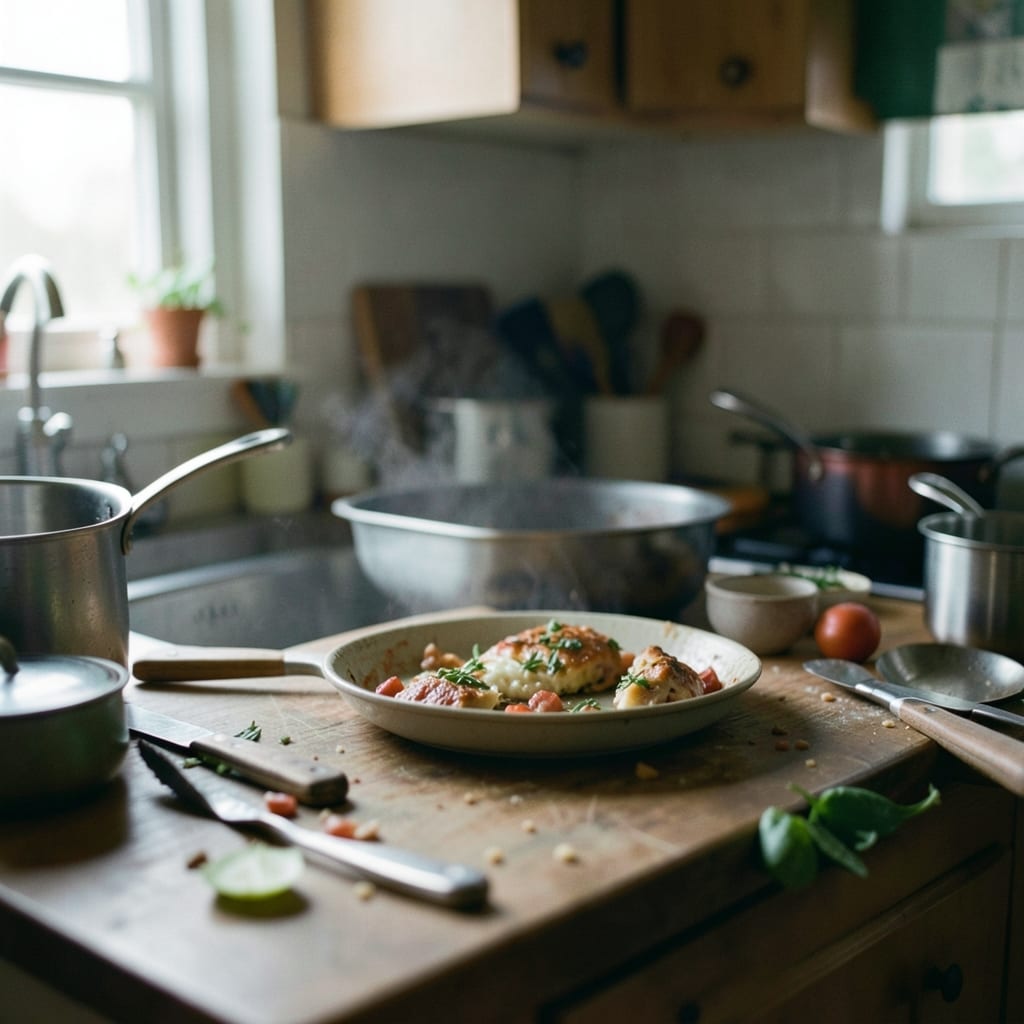
It was a Tuesday night, and I’d just pulled a batch of homemade pasta sauce out of the oven. The kitchen smelled like garlic and sun-dried tomatoes, but when I tasted it, something was off—not the flavor, but the *feel* of it.
The sauce was too thin, too rushed, like I’d forgotten the most important part: letting it sit. My abuela had always said, *‘El tiempo es el mejor ingrediente,’* and I’d been in such a hurry to document the recipe that I’d skipped the waiting.
That’s when I realized I wasn’t just cooking for myself anymore—I was cooking for people who might not have that same patience, or the same instincts. I needed a place where recipes weren’t just instructions, but *lessons* with room for mistakes.
This site is for anyone who’s ever stared at a recipe and thought, *‘This can’t be right,’* or burned something because the instructions assumed you had a magic touch. Here, you’ll find dishes that work the first time—not because they’re foolproof, but because they’re *tested* the hard way.
No shortcuts, no vague measurements, no ‘taste as you go’ when you’re not sure what ‘good’ even tastes like. Just real food, made by someone who’s dropped more pots than they’d like to admit.
Meet the founder
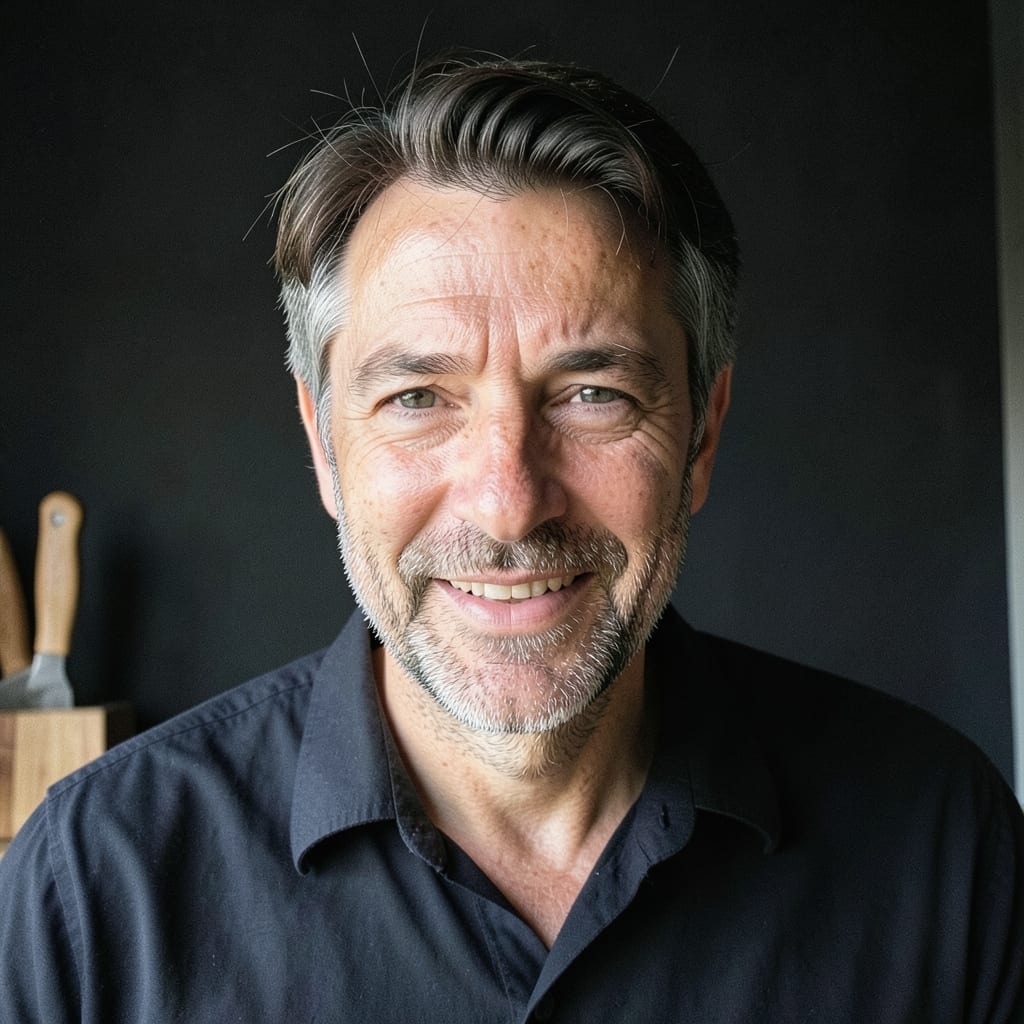
The first time I really learned to cook was in my abuela’s kitchen in Albuquerque, where the stove was always on and the counter was cluttered with jars of spices and half-used bags of rice.
She’d hand me a wooden spoon and say, *‘Mira, no es magia,’* but then she’d adjust the heat without looking, or taste something and immediately add a pinch of this or that. I’d burn the rice. She’d laugh and say, *‘Otra vez,’* and we’d try again.
That’s the habit I can’t shake: the belief that cooking is about fixing what goes wrong, not just following a list.
There’s a cast-iron skillet in my kitchen now—chipped along the rim, warped from years of uneven heat—that my dad gave me when I was sixteen. He’d won it at a county fair, and it’s the only thing I’ve ever kept from his place.
It’s too heavy for quick searing, but I still use it for beans and stews because it holds heat the way nothing else does. The chip in the handle is where I dropped it the first time I tried to make chili.
I’ve replaced every other pan, but that skillet stays.
The failure that changed everything was a batch of empanadas. I’d spent all day rolling out the dough, filling them carefully, and then—because I was ‘optimizing’—I baked them at 425°F instead of 375°F. They came out crisp on the outside, rubbery on the inside.
My roommate took one bite and said, *‘This tastes like regret.’* I threw half of them out and rewrote the recipe from scratch, this time with a thermometer and a timer. Now, every recipe here has a ‘don’t do this’ section.
I work in a sunlit corner of my apartment, where the only thing on the counter is a cutting board, a knife that’s seen better days, and a notepad covered in scribbled notes.
The light is always natural—I refuse to cook under fluorescent bulbs—and I test every recipe at least twice, once in the morning (when I’m fresh) and once at night (when I’m tired, because that’s when most people cook). The habit I can’t shake?
Tasting everything with my eyes closed, like my abuela used to do, to ‘listen’ to the flavors.
Meet the mascot

The mascot started as a doodle in a notebook during a long flight from Denver to Albuquerque. I was sketching a saucepan with a lid, but the first scribble made it look like a sad, lopsided teapot.
I crossed it out and tried again, this time giving it a handle that curled like a question mark. By the time I landed, it had turned into a pot with a face—round, cheerful, and just a little bit mischievous, like it knew it was about to burn something.
The drawn version was a proper sketch on graph paper, where I gave it a proper lid (no more teapot confusion) and a spoon that doubled as an eyebrow.
The pot itself had a chipped rim, a nod to the cast-iron skillet in my kitchen, and a little steam rising from its spout. I even added a tiny tag that read *‘Receta en progreso’*—‘Recipe in progress’—because that’s how I feel most days.
For the final version, I simplified everything that didn’t need to be there: the steam became a single wisp, the tag turned into a tiny line, and the spoon-eyebrow stayed but got shorter.
The pot’s face was reduced to two dots and a smile, so it’d still look like a pot even when shrunk to the size of a browser tab.
I named it *‘Caldero,’* after the Spanish word for a big cooking pot—because this site is all about the pots, the pans, and the dishes that bring people together.
What I promise you
You can trust that every recipe here is built to survive the chaos of real cooking—not just the first try, but the second, third, and tenth. If it doesn’t work, I’ll tell you why, and how to fix it.
What you can hold me to
- Every recipe includes troubleshooting for common mistakes (and a few uncommon ones).
- Measurements are precise but flexible—with notes for when your kitchen doesn’t cooperate.
- The ‘why’ is always explained. No ‘add salt to taste’ without telling you what ‘taste’ should be.
- If a recipe fails, it gets rewritten—not ignored.
How I create a recipe
A recipe starts in my kitchen, usually on a day when I’ve got nothing better to do than stand at the stove for an hour.
I don’t pull out a notebook until I’ve already messed up at least once—burned the garlic, over-salted the broth, or let the sauce reduce too fast. Those mistakes are the ones that matter. The real work begins when I realize what went wrong and why.
The first test: hands and heat

The first test is always with my hands. I measure by weight when I can, but I also learn the feel of a properly hydrated dough or the drag of a knife through a ripe tomato.
I watch for the way heat behaves—not just the temperature on the dial, but how the pot sweats before it boils, or how a roast changes color in the last five minutes. If the sauce splatters too much, I lower the heat.
If the crust browns unevenly, I rotate the pan. No shortcuts, no ‘eyeballing’ when the result matters.
The moment it goes wrong is usually obvious: a crust that cracks, a sauce that separates, a texture that’s either gummy or dry. I write down the exact time, temperature, and what I did differently the second time. The goal isn’t perfection—it’s consistency.
If a recipe works once but not the next, it’s not ready yet.
The second test: the fix
The fix always starts with the hands again. If the dough was too sticky, I adjust the flour by 5 grams. If the sauce was too thin, I reduce it longer—but this time, I use a candy thermometer to track the exact temperature.
I never trust a recipe until it works twice in a row, with the same results. The second test is where I add the ‘why’: why the heat needed to be lower, why the resting time mattered, why the knife needed to be sharper.
I taste everything at room temperature, not fresh out of the oven, because that’s when flavors settle. If something still feels off, I go back to the start.
The most reliable recipes aren’t the ones that work the first time—they’re the ones that work *every* time, even when you’re tired, distracted, or using a different pan.
How a page gets onto this site
Once a recipe passes the stove test, I write it down while it’s still warm—notes scribbled on a legal pad, with cross-outs and question marks. The first draft is always messy, because I’m still figuring out how to explain what I just did.
I read it aloud to make sure it makes sense, then cut anything that feels like filler. The real work happens when I test it a third time, this time with someone who’s never cooked the dish before. If they get stuck, I rewrite the step.
If they ask, *‘Why?’* I add it.
Write to me
I love hearing about the recipes you’ve tried, the ones that failed, and the ones you’ve made your own. Did a sauce turn out too thin? Did a crust crack before it browned? Did you finally get the timing right? Send me the details—I’ll add it to the troubleshooting section.
And if you’ve got a dish you’ve been meaning to master, tell me about it. The best recipes start with a question.
You can reach me through the contact page. No email address here—just a note, a story, or a recipe that needs fixing. Let’s make something better together.
The recipes are grouped by category: Appetizers, Beverages, Breakfast & Brunch, Desserts, Main Courses and Reviews.