Sauces & Condiments
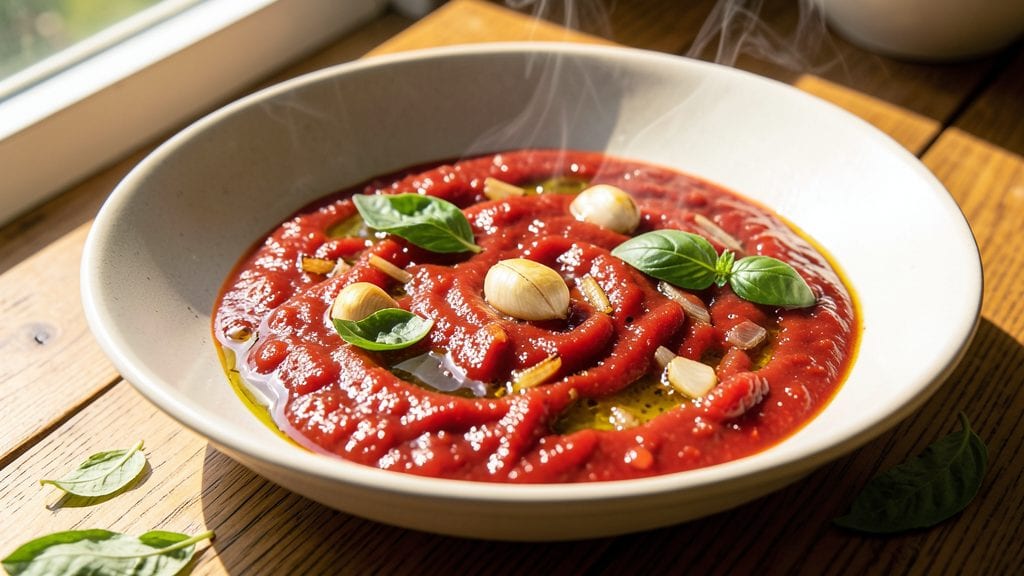
This authentic pomodoro sauce recipe transforms simple San Marzano tomatoes into a velvety, deeply flavorful sauce that elevates any Italian dish. The secret lies in slow simmering—allowing the natural sweetness of these premium tomatoes to concentrate while developing complex layers of garlic, olive oil, and fresh basil.
I perfected this version after years of testing, ensuring every spoonful delivers that perfect balance of acidity and richness that defines true pomodoro.
The process is straightforward yet precise: crushed tomatoes simmer gently with aromatics until reduced to a thick, glossy consistency, never losing that vibrant red hue.
What sets this sauce apart is the attention to texture—smooth enough to coat pasta perfectly yet vibrant enough to brighten bruschetta or drizzle over grilled meats. The result is a sauce that tastes like it's been simmering in a Roman trattoria all day, not your home kitchen.
This pomodoro sauce delivers restaurant-quality depth in just 45 minutes of active time, with flavors that deepen as they sit. The slow reduction caramelizes the natural sugars, creating a sauce that's both rich and bright—never heavy or overly acidic.
Whether tossed with al dente pasta, spread on toasted bread, or used as a base for pizza, this sauce becomes the star of your meal.
Store the sauce for up to 5 days in the refrigerator or freeze for 3 months, making it perfect for meal prep. The versatility is its greatest strength—use it as a quick weeknight dinner sauce or elevate it with fresh herbs and a splash of balsamic for weekend entertaining.
Here’s how to make it perfectly every time.
Ingredients for authentic pomodoro sauce
Eight simple ingredients transform into velvety pomodoro perfection—no shortcuts needed.
| Ingredient | Amount | Notes |
|---|---|---|
| San Marzano Crushed Tomatoes 🍅 | 2 cans | 28 oz each, no salt added |
| Extra-Virgin Olive Oil 🫒 | ½ cup | High quality, fruity variety |
| Garlic Cloves 🧄 | 4 cloves | Fresh, peeled, thinly sliced |
| Fresh Basil Leaves 🌿 | ½ cup | Packed, stems removed |
| Onion 🧅 | 1 whole | Yellow, finely diced |
| Salt 🧂 | 1 ½ tsp | Diamond Crystal preferred |
| Black Pepper 🌶️ | ½ tsp | Freshly ground preferred |
| Red Wine Vinegar 🍷 | 1 tbsp | For brightness |
| Sugar 🍚 | 1 tsp | Balances acidity |
The tomatoes are non-negotiable. San Marzano is the gold standard—La Bufala or Centopietre brands are my go-to. Look for the 28 oz cans at Italian markets or well-stocked grocery stores like Whole Foods or Trader Joe's. The olive oil should be fruity and peppery—California Olive Ranch or Colavita are reliable. Fresh basil is ideal, but if you're using dried, reduce to one-third the amount and add it at the end. The garlic needs to be fresh—no pre-minced jars here. Those little jars of minced garlic are convenient but taste like nothing. Peeled and sliced yourself in 30 seconds makes all the difference.
No San Marzano? Whole peeled tomatoes work in a pinch—just crush them by hand. Short on basil? Fresh parsley or oregano adds a different but still delicious depth. The sugar might seem odd, but it's crucial—the natural acidity in tomatoes needs balancing. No vinegar? A splash of lemon juice works too. Want more richness? Stir in 1 tbsp tomato paste at the start. The onion is optional but adds sweetness—caramelize it first if you're feeling fancy. And if you're making this ahead, freeze the sauce in ice cube trays for perfect portions later.
This sauce gets better with time—simmer for 30 minutes minimum for maximum flavor. Store in an airtight container in the fridge for up to 5 days, or freeze for 3 months. The texture will thicken as it cools, so add a splash of water if it's too stiff. I always double the batch—one for tonight's pasta, one for next week's pizza base. The sauce thickens beautifully when reheated, so portion it out before storing. And if you're feeling extra, top with fresh basil and a drizzle of olive oil before serving—trust me, it's worth it.
Why You'll Love This Recipe
- No-Fuss Simplicity: I swear by this recipe because it’s the kind of sauce I can make while chatting with a friend on the phone. Just sauté the onion in olive oil, toss in the garlic, then dump in those San Marzano tomatoes and let it simmer—no fancy techniques, no stress.
- Garlic-Basil Magic: That first bite of garlic-kissed tomato with fresh basil? It’s the kind of flavor that makes you pause mid-spoonful. The San Marzano tomatoes give it that perfect balance—sweet, tangy, and bright—without needing anything extra.
- Leftovers That Shine: Between us, this sauce only gets better the next day. I double the batch on Sundays, freeze half, and still have enough for lazy weeknight dinners. Pasta, bruschetta, eggs—it’s my go-to for when I don’t want to cook but still crave something good.
- Budget-Friendly Luxury: Honestly, this is one of those recipes where the ingredients cost next to nothing, but the result tastes like you spent hours. A can of San Marzano tomatoes, a bulb of garlic, and a handful of basil stretch far—and the olive oil makes it feel special without breaking the bank.
Step-by-step instructions for authentic pomodoro sauce
Here's the classic Italian method that delivers rich, balanced flavor every time.
Sauté the Onion Until Transparent
Heat the 0.5 cup extra-virgin olive oil in a heavy-bottomed saucepan over medium-low heat. Add the 1 whole finely diced onion and cook for 8-10 minutes, stirring occasionally, until completely soft and light golden in color. This slow cooking process prevents burning and develops sweetness in the onion.
I like to use a wooden spoon here—it helps distribute the oil evenly and prevents the onion from sticking. If the onion starts to brown too quickly, reduce the heat slightly. The goal is to create a flavor base that won't overpower the delicate tomato flavor later.
Add Garlic and Cook Until Fragrant
Once the onion is fully softened, add the 4 cloves thinly sliced garlic cloves and cook for 1-2 minutes until lightly golden and releasing their aroma. Be careful not to let the garlic burn—it should smell sweet and nutty, not bitter. This quick cooking time preserves the garlic's natural flavor without making it harsh.
Here's a pro tip: I like to add the garlic when the onion is nearly done because it cooks faster. If you add it too early, it might burn before the onion is fully tender. The garlic should be just barely colored when you're ready for the next step.
Stir in Tomatoes and Seasonings
Pour in the 2 cans San Marzano crushed tomatoes, stirring to combine with the onion and garlic mixture. Add the 1.5 teaspoons salt, 0.5 teaspoon black pepper, 1 tablespoon red wine vinegar, and 1 teaspoon sugar. The vinegar brightens the tomatoes while the sugar helps balance their natural acidity—this is what makes this sauce authentically Italian.
Bring the sauce to a gentle simmer over medium heat, then reduce to low heat. Let it cook uncovered for 20-25 minutes, stirring occasionally. You'll notice the sauce thickens slightly as it simmers, and the flavors meld together beautifully. This slow cooking process allows the natural sweetness of the tomatoes to develop fully.
Finish with Fresh Basil
After simmering, remove the pan from heat and stir in the 0.5 cup fresh basil leaves. Let the sauce sit for 5 minutes to allow the basil to infuse its flavor. The basil should be added at the end to preserve its bright, fresh aroma—adding it earlier would make it cook down and lose its vibrant quality.
For the best texture, I like to use a potato masher to gently break up any large tomato chunks while keeping some texture in the sauce. This gives you that classic pomodoro look with a mix of smooth and slightly chunky elements. Taste and adjust seasoning if needed—you might want to add a pinch more salt or pepper to balance the flavors.
Rest and Serve
Let the sauce rest for 10 minutes before serving. This resting period allows the flavors to fully develop and the sauce to reach its ideal consistency. Pomodoro sauce tastes even better the next day as the flavors continue to meld, so don't hesitate to make extra for leftovers.
Serve the sauce warm over your favorite pasta, drizzled with a little more extra-virgin olive oil if desired. The rich tomato flavor pairs perfectly with al dente spaghetti or penne, creating a simple yet satisfying Italian meal that delivers on that authentic taste you're looking for.
Pro Tips For Making Authentic Pomodoro Sauce
- Sweat the Onion Slowly: I learned this the hard way—dicing onions and tossing them straight into oil makes the sauce bitter. Instead, thinly slice them and cook over medium-low heat for 8-10 minutes until translucent but not browned. This builds flavor without adding harshness, and you won’t taste raw onion when the basil hits later.
- Crush Garlic, Don’t Mince: Whole cloves get toasted deeper, but mincing burns before the aroma develops. Use a flat side of your knife to gently crush 3-4 cloves (no smaller than ¼-inch chunks) and let them sizzle in the oil for 30 seconds before adding anything else. This gives you nutty, sweet garlic without bitterness—trust me, your sauce will taste like a real Italian nonna made it.
- Skip the Boil: Pomodoro sauce isn’t a stew—it’s a delicate balance. Once you add the crushed tomatoes, keep the heat at a gentle simmer (tiny bubbles, but not rolling). Boiling turns the sauce cloudy and dulls the San Marzano’s natural sweetness. I know, it feels like it’s not cooking fast enough, but patience here makes the difference between "meh" and "wow."
- Stir in Basil Last: Tossing basil in early bruises the leaves and turns the sauce bitter. Wait until the very end—when the sauce is just off the heat and still warm—to add a handful of torn leaves. Let it steep for 2 minutes, then remove the basil (or leave it if you’re feeling lazy). The flavor will infuse without overpowering, and your dish will smell like a Tuscan summer.
Common mistakes when making this recipe
Skipping the Onion
This is a common mistake that robs your pomodoro of its sweet, caramelized depth. The onion adds subtle sweetness that balances the acidity of the tomatoes—skipping it makes the sauce taste one-dimensional.
I always caramelize 1 whole yellow onion until translucent before adding garlic. If you're short on time, at least sauté it until soft, not browned. The flavor difference is noticeable! 🧅
Overcooking the Garlic
Garlic burns faster than you think, and once it turns bitter, there's no fixing it. I see people add garlic too early and walk away, only to return to a pan full of burnt, acrid-smelling paste.
Cook your 4 cloves thinly sliced garlic for just 1-2 minutes until fragrant but still pale—never golden. Remove from heat immediately if it starts to darken. Fresh garlic should smell sweet and nutty, not harsh.
Using Low-Quality Tomatoes
This is the biggest authenticity killer. I can't stress enough: San Marzano tomatoes are non-negotiable for true pomodoro flavor. Cheap canned tomatoes often have added salt, artificial flavors, or watery consistency that ruins the sauce.
If you must substitute, use whole peeled tomatoes crushed by hand—never the pulpy, watery varieties. The La Bufala or Centopietre brands are worth the extra cost for that authentic Italian taste.
Adding Basil Too Early
Fresh basil is the soul of pomodoro, but adding it too soon destroys its bright, aromatic qualities. When cooked down, basil becomes bitter and loses its vibrant flavor. Always stir in the 0.5 cup fresh basil leaves in the final 5 minutes of cooking or right after removing from heat.
For maximum impact, let it steep for 5 minutes before serving. This simple timing change makes all the difference in texture and aroma.
Ignoring the Sugar
The 1 teaspoon sugar in this recipe isn't about sweetness—it's about balancing the natural acidity of tomatoes. Skipping it leaves your sauce tasting sharp and unfinished. The sugar helps develop the Maillard reaction, creating deeper, more complex flavors.
If you're concerned about sweetness, taste the sauce before adding it—you'll barely notice the sugar, but its absence will make the sauce taste flat and one-note.
Not Simmering Long Enough
Rushing the simmer is the fastest way to end up with a thin, watery sauce. Pomodoro needs time—at least 30 minutes of gentle simmering to develop its rich, concentrated flavor. The longer it cooks, the more the natural sugars caramelize, creating that velvety texture.
I often let mine simmer for 45 minutes for maximum depth. Patience here transforms good sauce into great sauce. ⏳
Nutrition facts
Frequently asked questions
Can I make this pomodoro sauce without fresh basil?
Yes, but the flavor will be different. Use 1 tablespoon dried basil instead, added during the simmering process. For extra depth, combine it with 1 teaspoon dried oregano—this Mediterranean herb pairing mimics the complexity of fresh basil. Just remember, dried herbs are more concentrated, so start with less and adjust to taste.
How do I adjust the thickness of the sauce?
If your sauce is too thin after simmering, simmer uncovered for 10-15 more minutes to evaporate excess liquid. For a thicker texture immediately, mash some of the tomatoes with a fork while cooking. If it becomes too thick, stir in 1-2 tablespoons water or pasta water to loosen it. The ideal consistency should coat the back of a spoon but still be pourable.
Can I use this sauce for dishes other than pasta?
This versatile sauce works beautifully on grilled chicken, bruschetta, or as a marinade for eggplant or zucchini. For pizza, use it as a base and top with mozzarella and fresh basil. You can also drizzle it over polenta or use it as a dip for garlic bread. The bright acidity makes it perfect for balancing rich proteins.
Why does my pomodoro sauce taste too acidic?
The acidity comes from the tomatoes and vinegar, but it can be balanced with the 1 teaspoon sugar in the recipe. If it's still too sharp, add ½ teaspoon more sugar or a pinch of salt to round out the flavors. For a more complex taste, stir in 1 teaspoon tomato paste and simmer for 5 minutes—this adds depth and mellows the acidity naturally.
How can I make this sauce ahead of time?
This sauce actually tastes better the next day! Let it cool completely, then store in an airtight container in the fridge for up to 5 days. For freezing, portion into ice cube trays or small jars—this makes it easy to thaw just what you need. Reheat gently on the stove over low heat, stirring occasionally, until warmed through. The flavors continue to develop as it sits, so plan ahead!