Sauces & Condiments
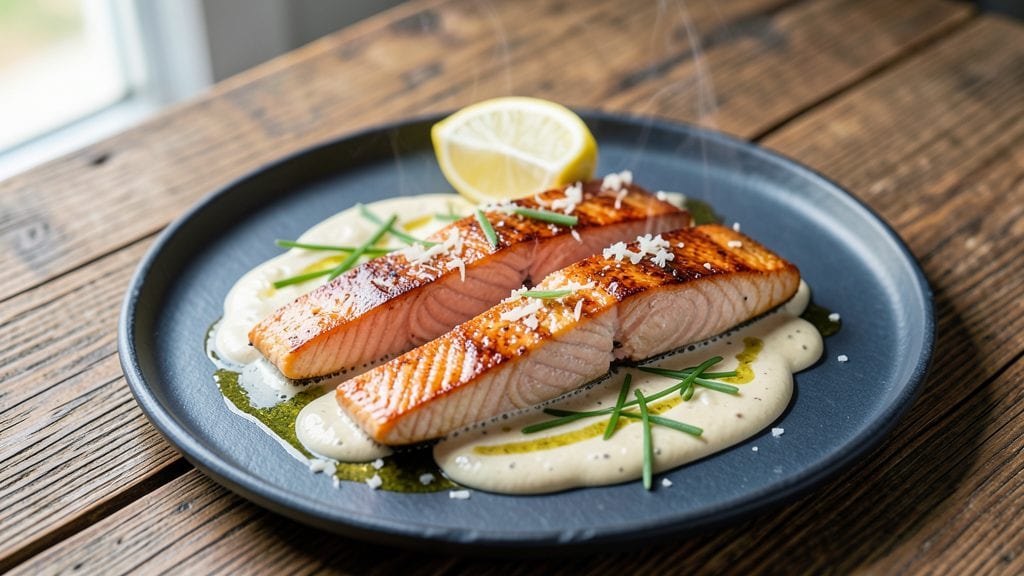
This salmon with alfredo sauce recipe delivers the perfect marriage of rich, velvety sauce and delicate flaky fish—every bite combines buttery creaminess with tender, perfectly cooked salmon. The secret lies in a foolproof technique for crispy skin and a sauce that clings to each flake without overpowering the natural flavor.
I developed this dish after years of experimenting with restaurant-quality alfredo, ensuring the sauce stays smooth and the salmon remains moist.
The alfredo sauce here uses a perfect balance of heavy cream, butter, and parmesan, creating a luxurious texture that coats the salmon beautifully. The key is cooking the sauce gently to prevent curdling while still achieving that signature creamy consistency.
Meanwhile, the salmon is prepared with just the right seasoning and cooking time—12 to 15 minutes total—to guarantee flaky perfection every time.
What you’ll end up with is a dish that looks as impressive as it tastes: golden salmon topped with a glossy, creamy alfredo sauce that melts into every bite. The sauce’s richness complements the salmon’s natural sweetness, while the crispy skin adds a satisfying contrast.
This recipe is restaurant-quality without requiring advanced skills—just precise timing and attention to detail.
Serve it over a bed of roasted vegetables or with a side of garlic bread to soak up every last drop of that creamy sauce. The combination of textures and flavors makes this dish ideal for a special dinner or a comforting weeknight meal.
Let’s get cooking—your taste buds will thank you.
Ingredients for salmon with alfredo sauce
Rich alfredo sauce meets delicate salmon—just 13 ingredients for restaurant-quality perfection.
| Ingredient | Amount | Notes |
|---|---|---|
| Center-Cut Salmon Fillets 🐟 | 4 whole | Skin-on, 6-8 oz each |
| Unsalted Butter 🧈 | ½ cup | Cold, cut into 8 pieces |
| Heavy Whipping Cream 🥛 | 1 cup | Full-fat for richness |
| Parmesan Cheese 🧀 | 1 cup | Freshly grated, fine |
| Extra-Virgin Olive Oil 🫒 | 2 tbsp | For crisping skin |
| Garlic Cloves 🧄 | 4 cloves | Minced, fresh preferred |
| Fresh Lemon Juice 🍋 | 1 tbsp | Bright, not bottled |
| Diamond Crystal Kosher Salt 🧂 | 1 ½ tsp | For seasoning |
| Freshly Ground Black Pepper 🌶️ | ½ tsp | Cracked peppercorns |
| Shallots 🧅 | 2 whole | Thinly sliced, 1/4-inch |
| Fresh Parsley 🌿 | ¼ cup | Chopped, for garnish |
| White Wine 🍷 | ¼ cup | Dry, like Chardonnay |
| All-Purpose Flour 🌾 | 1 tbsp | For sauce thickening |
The salmon makes or breaks this dish. Center-cut fillets with skin are non-negotiable—the skin crisps beautifully and adds texture. Grab the thickest pieces you can find at Whole Foods or your local seafood counter (they'll usually cut them to size). If you're using frozen, thaw overnight in the fridge—never under running water, or the fish will dry out. The Parmesan? Parmigiano-Reggiano from a wedge grates finer and tastes better than pre-grated. I always buy extra and keep it in the freezer for other dishes.
No heavy cream? Full-fat Greek yogurt thinned with milk works in a pinch, though the sauce won't be quite as velvety. Short on Parmesan? Pecorino Romano at double the amount gives a sharper kick. That white wine? Dry Chardonnay or Sauvignon Blanc from the store bottle—no need for fancy stuff. The shallots add sweetness that balances the sauce's richness. If you can't find them, substitute 1/4 cup finely chopped red onion. Fresh parsley is ideal, but dried works at one-third the amount if you're in a bind. Just make sure it's Italian parsley, not curly.
This sauce reheats beautifully—just add a splash of cream or milk to loosen it up. Store leftovers in an airtight container for 3-4 days in the fridge. The salmon? Eat it immediately for peak texture, but you can reheat gently in the oven at 300°F for 8-10 minutes. For meal prep, portion the sauce separately and assemble when ready to serve. The flavors actually improve overnight as everything melds together—trust me, it's worth making a double batch.
Why You'll Love This Recipe
- I’ll be real: most creamy sauces turn gloppy when reheated. Not this one. The butter and cream create a sauce that’s still silky the next day, whether you’re packing lunches or reheating for dinner. Plus, the salmon stays moist—no dry, sad fish here. It’s my secret weapon for meal prep.
- One-Pan Magic: I swear by this recipe when I’m too tired to scrub pots—just sear the salmon in olive oil, pour in the cream and butter, let it simmer until the sauce thickens, and boom. The salmon stays juicy while the sauce clings like a dream, and honestly? I’ve never had a single pan left dirty afterward.
- Rich Without Effort: That velvety alfredo—made with heavy cream, butter, and a good grated Parmesan—transforms simple salmon into something restaurant-worthy. The secret’s in the slow simmer; it caramelizes just enough to give the sauce depth, while the salmon’s natural sweetness cuts through the richness. (Yes, even on a Tuesday night.)
- Weeknight to Dinner Party: Between us, this dish is my go-to for both lazy evenings and when I’m hosting. For weeknights, I serve it over pasta with a side salad—minimal fuss. For company, I add a sprinkle of fresh parsley and a squeeze of lemon, and suddenly it feels fancy. The sauce reheats beautifully, so it’s always a win.
Step-by-step instructions for salmon with alfredo sauce
Here's how to create that perfect buttery crust over perfectly flaky salmon.
Season and Sear the Salmon Skin-Side Down
Preheat your oven to 400°F. Pat the salmon fillets completely dry with paper towels - this is crucial for crispy skin. Place them skin-side down on a parchment-lined baking sheet. Rub each fillet with 1 tablespoon extra-virgin olive oil and season generously with 1.5 teaspoons diamond crystal kosher salt and 0.5 teaspoon freshly ground black pepper, focusing on the skin side.
Here's the thing - the skin needs to crisp up first. Place the baking sheet on the middle rack and bake for 8-10 minutes until the skin is golden brown and crispy. You'll see it start to pull away slightly from the baking sheet at the edges - that's your signal. Flip each fillet carefully with a thin metal spatula and return to the oven for 4-5 minutes more, until the flesh is just opaque in the center.
Build the Rich Alfredo Base
While the salmon cooks, heat 0.5 cup unsalted butter in a large skillet over medium heat until it foams. Add the 2 whole shallots and cook for 3-4 minutes until softened but not browned. Add the 4 cloves minced garlic cloves and cook for another 30 seconds until fragrant.
Pour in the 0.25 cup white wine and let it simmer for 2 minutes until reduced by half. Sprinkle the 1 tablespoon all-purpose flour over the mixture and whisk vigorously for 1 minute until smooth. This creates a roux that will thicken our sauce beautifully.
Create the Creamy Alfredo Sauce
Slowly pour in the 1 cup heavy whipping cream while whisking continuously to prevent lumps from forming. Bring the mixture to a gentle simmer and cook for 3-4 minutes until slightly thickened. Remove from heat and stir in the 1 cup freshly grated parmesan cheese and 1 tablespoon fresh lemon juice.
Here's where the magic happens - the sauce should be velvety smooth with a luxurious sheen. If it's too thick, whisk in 1-2 tablespoons hot water to reach your desired consistency. Keep the sauce warm in a low setting while you finish the salmon.
Finish the Salmon and Combine
Transfer the cooked salmon fillets to a warm serving platter. Spoon the Alfredo sauce over each fillet, letting it cascade down the sides. The sauce should cling beautifully to the crispy skin and flaky flesh, creating that perfect buttery crust you're after.
Return the salmon to the oven for 2-3 minutes to let the sauce melt and adhere completely. Garnish with 0.25 cup chopped fresh parsley for a pop of color and freshness. Serve immediately with crusty bread or your favorite pasta to soak up every last bit of that creamy goodness.
Pro Tips For Making Salmon With Alfredo Sauce
- Salt the Salmon First: Pat the fillets dry, then season generously with flaky salt and a light crack of black pepper 15 minutes before cooking—this guarantees the seasoning penetrates instead of just sitting on top. I learned this the hard way when my salmon tasted bland no matter how much I seasoned after cooking.
- Melt Butter Slowly: For the alfredo, melt the unsalted butter over low heat—if you rush it, the sauce will split when you add the cream. I used to crank the heat, and half the time, the sauce would curdle. Take your time; it’s not a race.
- Strain the Parmesan: Grate the Parmesan fresh and strain out the powdery bits through a fine-mesh sieve—this keeps the sauce silky instead of gritty. I was skeptical until I tried it; the difference is noticeable, even if it feels like extra work.
- Finish with Olive Oil: After tossing the sauce with the salmon, drizzle in a teaspoon of extra-virgin olive oil—it brightens the richness and balances the heaviness of the cream. Sounds weird, but it works: the sauce stays cohesive and tastes more layered.
Troubleshooting great salmon with alfredo sauce
Sauce Curdling Fix
If your alfredo sauce suddenly looks grainy or separates, it’s likely curdled from overheating or acidic ingredients. The fix? Immediately remove from heat and whisk in 1 tablespoon cold heavy cream or 1 tablespoon cold butter.
This cools the sauce and re-emulsifies the fats. For extra insurance, strain through a fine-mesh sieve into a clean pot and reheat gently over low heat while whisking constantly. 💡
Salmon Overcooking
Overcooked salmon turns dry and flakes apart—ruining the delicate texture. The key is timing: remove fillets when they reach 125-130°F internal temperature (about 12-15 minutes total). Use a meat thermometer for precision.
If you’re unsure, cut into one fillet—it should flake easily but still hold together. For extra protection, baste with 1 tablespoon melted butter every 5 minutes while baking.
Skin Not Crispy
Dull, soft salmon skin is usually caused by moisture or insufficient heat. Pat fillets completely dry before seasoning—even slight dampness prevents crisping. For extra insurance, chill the salmon for 15 minutes in the fridge before baking to firm up the skin.
Place the baking sheet on the middle rack (not bottom) to ensure even heat distribution. If needed, broil for 1-2 minutes at the end for extra crispiness.
Sauce Too Thin
A runny alfredo sauce often means the roux didn’t thicken enough. Fix it by whisking in 1 tablespoon cold butter or 1 teaspoon cornstarch mixed with 1 tablespoon water. Simmer for 1-2 minutes until thickened.
For a smoother texture, strain through a fine-mesh sieve to remove any lumps. Pro tip: Always cook the sauce at medium-low heat—high heat breaks down the cream.
Fish Sticking Together
Salmon fillets can adhere to each other if not properly spaced. Use a parchment-lined baking sheet and place fillets ½ inch apart. For extra separation, lay thin strips of parchment between each fillet.
If they stick during baking, gently slide a thin metal spatula between them. Never crowd the pan—this traps steam and steams instead of sears the skin.
Sauce Separating Later
If your sauce looks fine initially but separates when reheated, it’s likely due to temperature fluctuations. Store leftovers in an airtight container and reheat gently over low heat while stirring constantly.
For extra stability, whisk in 1 teaspoon Dijon mustard (its emulsifiers help bind the sauce). Serve immediately after reheating to maintain that creamy texture. ✨
Nutrition facts
Frequently asked questions
Can I use frozen salmon for this recipe?
Yes, but thaw it properly first. Place frozen salmon in the refrigerator overnight for even thawing—never use cold water or the microwave, as this can make the flesh dry. Pat the fillets completely dry before seasoning to ensure crispy skin. The texture will be just as good as fresh salmon when cooked correctly.
What's the best way to make this dish vegetarian?
Swap the salmon for king oyster mushrooms or large portobello caps, sliced into thick steaks. Sear them skin-side down (if using mushrooms with skins) until golden, then proceed with the alfredo sauce as written. For extra richness, add 2 tablespoons nutritional yeast to the sauce. The texture will be satisfyingly meaty!
How do I prevent the sauce from curdling when reheating?
Always reheat alfredo sauce gently over low heat while whisking constantly. If it starts to separate, immediately remove from heat and whisk in 1 tablespoon cold heavy cream. For leftovers, store in an airtight container and reheat only until warmed through—never boil. A splash of white wine while reheating also helps maintain smoothness.
Can I make this ahead of time?
Prepare the sauce up to 1 day ahead and store it in the fridge. Reheat gently, then spoon over freshly cooked salmon just before serving. The salmon itself is best served immediately for optimal texture, but you can cook it ahead and reheat at 300°F for 8-10 minutes wrapped in foil. Assemble right before eating to keep everything perfect.
What wine pairs best with this dish?
A crisp Chardonnay or Pinot Grigio complements the creamy sauce and delicate salmon beautifully. For red wine lovers, a light Pinot Noir with bright acidity cuts through the richness. Serve at 45-50°F for the best experience—colder wines enhance the dish's creamy elements.