Sauces & Condiments
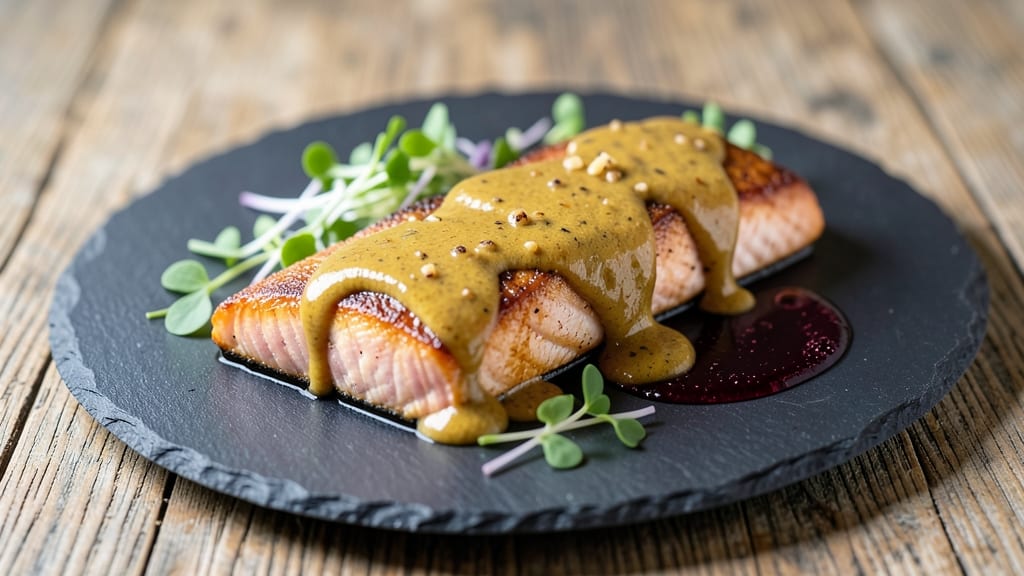
This salmon with mustard sauce recipe delivers restaurant-quality flavor in just 20 minutes—where crispy skin meets a tangy, herb-infused sauce that elevates simple weeknight dinners. The secret lies in a balanced mustard blend (Dijon, whole-grain, and a touch of honey) that caramelizes beautifully while keeping the salmon tender.
I developed this after years of testing pan-searing techniques, ensuring every bite has that perfect contrast between flaky fish and bold sauce.
The recipe starts with pan-seared salmon—skin-side down for crispiness—while the sauce simmers in the same pan, using the rendered fish oils for depth. This one-pan method cuts cleanup time and maximizes flavor without sacrificing quality.
The mustard sauce isn’t just tangy; it’s layered with fresh herbs (dill and parsley) and a splash of white wine for brightness, creating a sauce that clings to the salmon without overpowering it.
By the time you plate this dish, you’ll have golden, flaky salmon topped with a glossy, herb-studded sauce that’s rich yet balanced. The sauce’s caramelized edges add a subtle sweetness, while the herbs keep it fresh.
Serve with roasted asparagus or a simple arugula salad to let the salmon shine as the star. This is the kind of meal that feels indulgent but comes together faster than takeout.
Perfect for impressing guests or treating yourself midweek, this recipe scales easily from a single portion to a full dinner for four. The sauce keeps well in the fridge for up to three days, so you can prep ahead and reheat with a splash of water or lemon juice.
Let’s get cooking—your taste buds will thank you.
Ingredients for salmon with mustard sauce
Four salmon fillets, bold mustards, and fresh herbs—this is restaurant-quality in 20 minutes.
| Ingredient | Amount | Notes |
|---|---|---|
| Center-Cut Salmon Fillets 🐟 | 4 whole | Skin-on, 6-8 oz each |
| Unsalted Butter 🧈 | 4 tbsp | Cold, cut into small cubes |
| Dijon Mustard 🌶️ | 2 tbsp | High-quality, smooth texture |
| Whole-Grain Mustard 🌶️ | 1 tbsp | For texture and depth |
| Honey 🍯 | 1 tbsp | Wildflower or clover preferred |
| Dry White Wine 🍷 | ¼ cup | Sauvignon Blanc or Pinot Grigio |
| Fresh Dill 🌿 | ¼ cup | Chopped, stems removed |
| Fresh Parsley 🌿 | 0.15 cup | Chopped, flat-leaf preferred |
| Garlic Cloves 🧄 | 3 cloves | Minced, fresh preferred |
| Lemon Juice 🍋 | 1 tbsp | Freshly squeezed |
| Olive Oil 🫒 | 1 tbsp | Light, for pan coating |
| Sea Salt 🧂 | 1 tsp | Fine grain, kosher preferred |
| Ground Black Pepper 🌶️ | ½ tsp | Freshly cracked |
| Shallot 🧅 | 1 whole | Minced, or sub 1 tbsp onion |
The salmon makes or breaks this dish. Center-cut fillets stay together better than tail-end cuts—look for even thickness (about 1-inch) at the grocery store. Trader Joe's and Whole Foods usually have the best quality, but any fish counter with fresh daily turnover works. If you can't find center-cut, trim the tail end yourself. The skin should be shiny and intact—no tears or dull patches. For the mustards, Maille Dijon and French's whole-grain are my go-tos, but any good-quality brands work. The honey adds just enough sweetness to balance the tang—wildflower has more complexity than basic clover.
No white wine? Fish or chicken stock plus a splash of lemon juice mimics the acidity perfectly. Fresh herbs wilt fast, so if you're prepping ahead, dried dill at one-third the amount works in a pinch. The shallot adds depth—if you've got none, 1 tbsp minced red onion is a decent swap. For the butter, European-style (like Plugrá) has higher fat content and browns beautifully. If you're short on time, skip the shallot entirely—the garlic and herbs still shine. The lemon juice is non-negotiable though; it brightens the whole dish.
This sauce reheats beautifully—just add a splash of water or white wine to loosen it. Keeps 3 days in the fridge, 1 month frozen in an airtight container. I always make extra sauce because it's perfect over toast or scrambled eggs the next morning. The salmon itself is best served immediately, but if you need to reheat, cover tightly with foil and warm in a 200°F oven for 5-7 minutes. Leftovers taste even better cold in salads—trust me.
Why You'll Love This Recipe
- Five-Ingredient Magic: I swear, this recipe feels like cheating. Just butter, mustard, honey, and salmon—no fancy prep, no chopping, no stress. The fillets cook in 12 minutes flat while you mix the sauce, and honestly? That’s all the time I’ve got on weeknights.
- Sweet-Savory Balance: Here’s what sold me—the way the honey cuts through the sharp Dijon and whole-grain mustard. It’s rich but not heavy, tangy but not overpowering, and that golden glaze? Sticky, caramelized perfection that makes salmon feel special without effort.
- Weeknight to Dinner Party: Between us, this is my go-to for both lazy Tuesdays and impressing guests. Serve it over rice for a quick family meal, or plate it with asparagus and crusty bread when company’s over. Same recipe, zero extra work—just adjust the sides.
- Leftovers That Don’t Suck: Most salmon dishes turn into sad, dry rubber the next day. Not this one. The mustard sauce keeps it moist, and the honey adds just enough sweetness to make reheated slices taste like they’re fresh off the pan. Packs perfectly for lunches, too.
Step-by-step instructions for salmon with mustard sauce
Here's how to create a restaurant-worthy mustard glaze with perfectly cooked salmon in under 20 minutes.
Prepare the Mustard Sauce Base
In a small saucepan, combine the 4 tablespoons unsalted butter and 1 tablespoon olive oil over medium heat. Let them melt together while you mince the 1 whole shallot and 3 cloves garlic. Add these to the pan and cook for 2-3 minutes until the shallot becomes translucent and the garlic just begins to smell fragrant.
Next, whisk in the 2 tablespoons Dijon mustard and 1 tablespoon whole-grain mustard until completely smooth. Add the 1 tablespoon honey and stir until fully incorporated. The mixture should thicken slightly as it warms. Here's the thing—don't let it boil, just maintain a gentle simmer so the mustards don't lose their depth of flavor.
Deglaze and Build Flavor
Pour in the ¼ cup dry white wine and scrape up any browned bits from the bottom of the pan with a wooden spoon. This deglazing step captures all the flavor that would otherwise stick to your pan. Let the wine simmer for 2-3 minutes until reduced by about half, which concentrates the flavors beautifully.
Remove the pan from heat and stir in the 1 tablespoon lemon juice, 1 teaspoon sea salt, and ½ teaspoon ground black pepper. The sauce should now have a rich, tangy depth with a perfect balance of sweet and sharp. Set this sauce aside temporarily—it'll come back into play at the end.
Cook the Salmon to Perfect Doneness
Pat the 4 whole center-cut salmon fillets dry with paper towels—this ensures a crispy skin. Season both sides generously with additional sea salt and ground black pepper if desired. Heat a large skillet over medium-high heat until it's hot enough that a drop of water sizzles immediately when added.
Add the salmon fillets skin-side down and cook undisturbed for 4-5 minutes until the skin is crispy and golden brown. You'll know it's ready when the edges lift easily from the pan. Flip the fillets carefully and cook for another 3-4 minutes until the salmon reaches 145°F internally. The flesh should flake easily with a fork but still look slightly translucent in the center.
Finish with Herbs and Sauce
Remove the salmon from the pan and transfer to a serving platter. Keep it warm by tenting loosely with aluminum foil. Return the pan with the reserved mustard sauce to medium heat and stir in the ¼ cup chopped fresh dill and ⅛ cup chopped fresh parsley. Let the herbs warm through for just 30 seconds—this releases their aromatic oils without overpowering the delicate flavors.
Drizzle the herbed mustard sauce generously over the salmon fillets, allowing it to cascade down the sides. The combination of the tangy mustard, sweet honey, and bright herbs creates a perfect balance that complements the rich salmon beautifully. Serve immediately with your choice of sides—roasted vegetables, crusty bread, or a fresh green salad works wonderfully.
Pro Tips For Making Salmon With Mustard Sauce
- PAT THE FILLETS DRY: Grab paper towels and press hard—no half-measures. Wet skin sticks to the pan, and that’s when your salmon turns into sad, greasy pancakes instead of golden, crispy perfection. I learned this the hard way after serving rubbery salmon to guests who still asked for seconds.
- MELT BUTTER LOW AND SLOW: Warm the butter over medium-low heat until it’s just melted, then remove from the pan. If you let it bubble, you’ll burn the mustard and end up with a sauce that tastes like regret. Think "gentle whisper" of heat, not a screaming pan.
- BALANCE MUSTARDS BY WEIGHT: Dijon has more bite—use two parts whole-grain to one part Dijon for a sauce that’s tangy but not overpowering. I used to eyeball it and ended up with either a mouth-puckering or bland sauce. A quick kitchen scale or even a spoonful measurement fixes this.
- REST SALMON UNDER FOIL: Plate the salmon, drizzle the sauce, then tent it with foil for 3-5 minutes. This keeps it moist while you finish the sides—no more flaking fish that falls apart at the first forkful. (Yes, even if you’re impatient like me.)
Flavor customization for salmon with mustard sauce
Sweet Heat Balance
Adjust the mustard-to-honey ratio to control sweetness and tang. For extra heat, add ½ teaspoon cayenne pepper or 1 teaspoon sriracha to the sauce base. If you prefer less sweetness, reduce honey to ½ tablespoon and add 1 teaspoon lemon juice instead.
I find Maille Dijon has a smoother heat than other brands—perfect for delicate salmon. 🌶️
Herb Variations
Swap dill for tarragon or chervil for a more French-inspired flavor. For a Mediterranean twist, add 1 teaspoon dried oregano and ½ teaspoon red pepper flakes to the sauce.
Fresh basil works beautifully if you prefer a sweeter herb profile. I keep a small pot of fresh herbs on my windowsill year-round for quick access. 🌿
Creamy Upgrade
For a richer sauce, stir in 2 tablespoons heavy cream or 1 tablespoon Greek yogurt at the end. This adds silky texture while balancing the mustard's sharpness. I recommend full-fat Greek yogurt for the best creaminess. For a vegan option, use coconut cream instead. 🥛
Smoky Depth
Add ½ teaspoon smoked paprika or ¼ teaspoon liquid smoke to the sauce for a subtle smoky note. This pairs especially well with grilled or broiled salmon. For extra smokiness, cook the salmon over wood chips (apple or cherry) in your oven for the last 5 minutes of cooking. 🔥
Citrus Brightness
Enhance the sauce with 1 teaspoon orange zest or ½ teaspoon grated ginger for a tropical twist. The citrus cuts through the richness while adding fresh complexity. I love using blood orange juice instead of lemon for a deeper, slightly sweeter flavor. 🍊
Spiced Mustard Twist
Infuse the mustard with 1 crushed cardamom pod or ½ teaspoon ground coriander while simmering. These warm spices add unexpected depth that pairs beautifully with the salmon's natural oils. Remove the cardamom pod before serving to avoid bitterness. 🌱
Nutrition facts
Frequently asked questions
Can I use frozen salmon for this recipe?
Yes, but thaw it properly first! Place frozen salmon fillets in a sealed bag and submerge in cold water for 30 minutes, changing the water every 10 minutes. This keeps the texture firm. Never thaw at room temperature—it causes uneven cooking. Pat completely dry before seasoning to ensure crispy skin.
What's the best way to store leftover mustard sauce?
Transfer the cooled sauce to an airtight container and refrigerate for up to 3 days. For longer storage, freeze in 1-tablespoon portions—thaw quickly in the microwave or gently reheat on the stove with a splash of water. The sauce thickens when chilled, so stir before using.
Why did my salmon skin not get crispy?
This usually happens from one of three issues: not enough heat (use medium-high), fillets not dry (pat thoroughly), or moving them too soon (leave skin-side undisturbed for 4-5 minutes). For extra crispiness, add a pinch of baking soda to the skin before cooking—it creates a chemical reaction for a crunchier texture.
Can I make this sauce without wine?
Replace the ¼ cup white wine with ¼ cup fish stock plus 1 teaspoon lemon juice for acidity. Or use ¼ cup apple cider vinegar for tang. The key is maintaining the sauce's balance—adjust salt accordingly since stock is already seasoned.
How do I adjust the recipe for fewer/more servings?
Scale all ingredients proportionally. For 2 servings, halve everything (including sauce). For 6 servings, multiply by 1.5. The sauce-to-salmon ratio works best at ¼ cup sauce per 6-8 oz fillet. Keep the butter-to-oil ratio (4:1) for proper texture.