
Sauces & Condiments
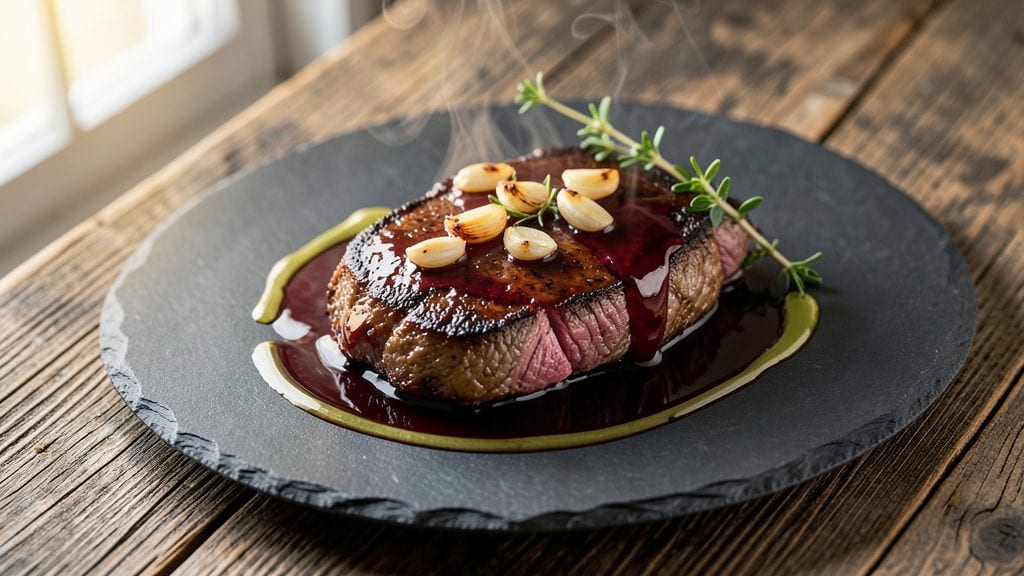
This steak glaze recipe transforms ordinary cuts into restaurant-quality masterpieces with just a few simple ingredients and 10 minutes of active time. The magic lies in caramelizing brown sugar with red wine and spices, creating a glossy, deeply flavorful coating that clings to every bite.
I developed this glaze after years of testing—it’s the one that finally earned me compliments from even the most critical steak lovers.
The secret starts with reducing red wine and brown sugar into a thick, syrupy base before adding aromatics like garlic and thyme. This reduction concentrates the flavors while developing a rich caramelized depth that cuts through the richness of steak.
The glaze works equally well on ribeye, filet mignon, or even chicken thighs, making it a versatile addition to any protein-centric meal.
What you’ll end up with is a glossy, sticky-sweet sauce that caramelizes beautifully when brushed over hot steak, creating a perfect balance of sweetness, acidity, and smoky depth. The aroma alone will have everyone anticipating dinner, and the first bite delivers that perfect harmony of flavors.
This glaze keeps well in the refrigerator for up to 2 weeks, so you can make a batch ahead and have it ready whenever the mood strikes.
Whether you’re grilling, pan-searing, or broiling, this steak glaze elevates every cut to new heights. Brush it on during the last 2 minutes of cooking for maximum impact, and prepare for compliments that will make your dinner guests ask for the recipe.
Let’s create this game-changing sauce together—your steak deserves it.
Ingredients for steak glaze
Nine simple ingredients transform into a restaurant-quality steak glaze that's quick, versatile, and deeply flavorful.
| Ingredient | Amount | Notes |
|---|---|---|
| Dry Red Wine 🍷 | 1 cup | Bold variety like Cabernet Sauvignon |
| Light Brown Sugar 🍯 | ¾ cup | Packed firmly, not lightly scooped |
| Garlic Cloves 🧄 | 4 cloves | Minced finely for smooth texture |
| Fresh Thyme Leaves 🌿 | ¼ cup | Or 1 tbsp dried thyme |
| Extra-Virgin Olive Oil 🫒 | ¼ cup | High-quality, fruity variety |
| Balsamic Vinegar 🍶 | 1 tbsp | For depth and tang |
| Smoked Paprika 🌶️ | 1 tsp | For subtle smokiness |
| Salt 🧂 | ½ tsp | Diamond Crystal preferred |
| Black Peppercorns 🌶️ | ¼ tsp | Freshly cracked for aroma |
The red wine is non-negotiable here—Cabernet Sauvignon or Merlot from a decent bottle works best, not the cheap cooking wine. Trader Joe's and Costco often have affordable but quality options. Brown sugar should be packed—lightly scooped means less flavor. For thyme, fresh is ideal, but dried works at one-third the amount if you're in a pinch. The olive oil matters too—California extra-virgin brands like Corto or Otto add fruity notes that elevate the glaze.
No red wine? Substitute beef broth with 1 tbsp balsamic vinegar—it won't be identical, but it works. Fresh thyme unavailable? Dried thyme at one-third the amount keeps the flavor profile intact. The smoked paprika adds depth, but regular paprika works in a bind. For extra richness, add 1 tbsp butter at the end. The glaze thickens as it cools, so start with slightly less sugar if you prefer a looser consistency. Store-bought balsamic vinegar is fine, but aged balsamic glaze adds luxurious depth.
This glaze keeps beautifully in the fridge for up to 2 weeks when stored in an airtight container. For longer storage, freeze in ice cube trays—perfect for single-use portions. Reheat gently in a small saucepan or microwave for 30 seconds. The glaze reheats best when brushed over warm steak—the residual heat finishes the caramelization right on the grill or pan. Double the batch; you'll want leftovers for next time.
Why You'll Love This Recipe
- One-Pot Magic: I swear by this glaze because it’s made in the same pan as the steak—no extra bowls, no messy cleanup. Just sear the steak, deglaze with red wine, toss in the sugar and thyme, and let it bubble down. That’s it. Honestly, I’ve made it drunk (yes, really) and still nailed it.
- Wine-Infused Richness: The red wine cuts through the sweetness while the brown sugar caramelizes into this sticky, savory glaze that clings to every bite. Fresh thyme adds a bright herbal note that makes it taste like a fancy bistro dish, not something you threw together. Between us, my picky husband actually licks the plate.
- Game for Any Steak: Use it on a quick weeknight sirloin or slather it on a holiday prime rib—it works both times. I’ve even drizzled it over grilled chicken or roasted potatoes when I’m out of steak. Not the prettiest, but the taste makes up for it every time.
- Budget-Friendly Luxury: A single bottle of red wine stretches across multiple glazes, and the other ingredients are pantry staples. The glaze thickens beautifully for leftovers—perfect for reheating or freezing. I’ll be real: it’s my go-to for making a $10 steak taste like a $30 dinner. No shame in that.
Step-by-step instructions for steak glaze recipe
This caramelized glaze transforms simple steak into a showstopper with layers of rich wine, smoky depth, and perfect balance.
Build the Glaze Base with Red Wine and Sugar
In a medium saucepan, combine the 1 cup dry red wine and 0.75 cup light brown sugar over medium-high heat. Stir continuously until the sugar fully dissolves and the mixture begins to simmer vigorously. You'll notice the wine reduce quickly—this is when the magic starts happening.
The sugar will start caramelizing, creating a deep amber color and an intoxicating aroma. Let this cook for 8-10 minutes, stirring occasionally, until the mixture thickens to a syrupy consistency that coats the back of a spoon. If it reduces too quickly, reduce the heat slightly to prevent burning. This foundational step develops the glaze's complex flavor profile.
Incorporate Aromatics and Smoked Depth
Once the wine-sugar mixture reaches a thick syrup stage, reduce the heat to medium-low and add the 4 minced garlic cloves, 0.25 cup fresh thyme leaves, 1 tbsp balsamic vinegar, and 1 tsp smoked paprika. Stir gently to combine, allowing the garlic to soften without browning—this ensures smooth texture rather than bitter bits.
The thyme leaves will infuse their earthy aroma while the balsamic vinegar adds a tangy brightness that cuts through the richness. The smoked paprika introduces subtle warmth that pairs beautifully with the wine's depth. Simmer this mixture for 5-7 minutes, stirring frequently, until it reduces by about one-third and becomes glossy. You're looking for a consistency that clings to the back of a spoon without being overly thick.
Finish with Olive Oil and Seasoning
Remove the saucepan from heat and whisk in the 0.25 cup extra-virgin olive oil to temper the mixture and create a silky texture. The olive oil also helps balance the acidity from the balsamic vinegar. Return the pan to low heat and add the 0.5 tsp salt and 0.25 tsp freshly cracked black peppercorns, stirring until fully incorporated.
Taste the glaze at this stage—it should be rich, slightly sweet, with a balance of acidity and smokiness. If needed, adjust the seasoning with additional salt or a splash more balsamic vinegar for brightness. Let the glaze cool slightly before using, as it will continue to thicken as it sits. This final step ensures your glaze is perfectly seasoned and ready to elevate any steak.
Apply to Steak for Maximum Flavor
Brush the warm glaze generously over seared or grilled steaks while they're still sizzling hot. The residual heat will cause the glaze to caramelize instantly, creating a glossy, sticky crust that locks in juices. For best results, apply the glaze in two stages: first after searing, then again in the final minutes of cooking.
For even more drama, broil the steaks for 1-2 minutes after glazing to create a deep caramelized crust. Serve immediately with the glaze pooling beautifully on the plate—each bite will deliver a perfect harmony of wine, sugar, and smoky depth that makes every cut of steak feel like a restaurant-worthy masterpiece.
Pro Tips For Making Steak Glaze
- Reduce the Wine Slowly: Simmer the red wine on medium-low heat—no rushing. I used to blast it and end up with a harsh, alcohol-forward glaze. Let it cook for 5-7 minutes until it’s reduced by about half, stirring occasionally. That’s when the sweetness and depth really start to meld.
- Toast the Sugar First: Before adding anything else, melt the brown sugar in the pan until it turns a deep amber color—about 2-3 minutes. This caramelizes the sugar and gives the glaze that rich, sticky texture. Skip this, and you’ll just end up with a cloyingly sweet sauce.
- Smash the Garlic: Don’t mince the garlic—smash it with the flat side of your knife first. This releases more flavor into the oil and prevents it from burning. I learned this the hard way after my glaze tasted bitter from overcooked garlic cloves.
- Strain the Thyme: After simmering, strain out the thyme leaves unless you’re okay with tiny herb bits in every bite. Fresh thyme adds great aroma, but the leaves can be tough—especially if you’re not a fan of texture. A fine-mesh strainer makes this easy.
Essential equipment for steak glaze
Saucepan Essentials
Start with a medium saucepan that has a 3-4 quart capacity—this gives you enough room to reduce the wine and sugar without spilling. I recommend a stainless steel pan like All-Clad or Cuisinart because they distribute heat evenly and prevent scorching.
Avoid nonstick pans for this recipe—they don’t handle high heat well and can release harmful fumes when caramelizing sugar. 🔥
For precise temperature control, use a kitchen torch (like the Weck Torch) to gently heat the glaze after brushing it on steak. This creates a professional-grade caramelized finish without overcooking the meat.
A heat-resistant silicone brush (such as OXO Good Grips) is also essential—it holds up to high heat and won’t melt or leave bristles behind.
Precision Tools
A digital kitchen scale (like the OXO Good Grips) ensures accurate measurements for the brown sugar—packing it firmly makes all the difference. I also use a fine-mesh strainer to remove thyme stems after simmering, leaving only the flavorful leaves behind.
For mincing garlic, a garlic press (like Norpro) gives you consistent, even results without burning the cloves.
Don’t skip a long-handled silicone spatula—it’s perfect for stirring the glaze without splashing. I prefer the Meridian brand because it’s heat-resistant up to 500°F and won’t warp. A small whisk (like Cuisinart) blends the olive oil smoothly at the end, creating that silky texture we want.
Heat Control
Invest in a thermometer (I use the Thermoworks Smoke) to monitor the glaze’s temperature—ideal reduction happens around 212-220°F. This prevents burning while ensuring the wine reduces properly.
A low-temp slow cooker (like Hamilton Beach) can also work for reducing the glaze if you’re concerned about scorching on the stovetop.
For finishing touches, a broiler pan (like All-Clad) elevates glazed steaks to restaurant-quality perfection. Place steaks on the rack to allow heat to circulate evenly, creating that beautiful caramelized crust. A tongs set (such as Victorinox) helps flip and position steaks without tearing the meat.
Storage Containers
Store leftovers in a glass jar with an airtight lid—I love the Le Parfait brand for its wide mouth and durable seal. For freezing, use silicone ice cube trays (like Stasher) to portion single-use servings.
Reheat glaze in a small saucepan over low heat or microwave in 15-second bursts to maintain its consistency.
A fine-mist spray bottle (like Spritz) helps thin the glaze if it becomes too thick after storage. Just add a splash of red wine or water and shake gently before using.
The key is to keep the glaze’s balance intact—never over-dilute it, or you’ll lose that perfect caramelized depth. 💫
Nutrition facts
Frequently asked questions
Can I make this glaze without red wine?
Substitute 1 cup beef broth with 1 tbsp balsamic vinegar for depth. The glaze will still develop rich caramelized flavors, though the wine's complexity will be slightly different. For extra richness, add 1 tbsp butter at the end.
How do I prevent the glaze from burning while reducing?
Keep the heat at medium-high and stir constantly during the first 8-10 minutes of reduction. If it starts to darken too quickly, reduce the heat to medium-low and let it simmer gently. A thermometer helps—aim for 212-220°F for safe reduction without burning.
What’s the best way to store leftover glaze?
Transfer to an airtight glass jar and refrigerate for up to 2 weeks. For longer storage, freeze in ice cube trays—thaw in the fridge overnight. Reheat gently in a saucepan or microwave in 15-second bursts to maintain its silky texture.
Can I use this glaze on other proteins besides steak?
Yes! It works beautifully on chicken thighs, pork chops, or even lamb chops. For poultry, apply the glaze in the last 5 minutes of cooking to avoid overcooking. The wine and sugar balance the richness of these meats perfectly.
Why did my glaze turn out too thick?
This happens if you reduce it too long or the sugar didn’t fully dissolve initially. Thin with 1 tsp red wine or water at a time, stirring constantly. For future batches, remove from heat slightly earlier and let it cool—it thickens as it sits.